Jeremy deWaard

Testing the utility of mitochondrial DNA (COI) sequences for the identification and phylogeny of New Zealand caddisflies (Trichoptera). New Zealand Journal of Marine and Freshwater Research

November 15th, 2009 at 12:21 am

Posted in Publications

Hogg, I.D., Smith, B.J., Banks, J.C., deWaard, J.R., and Hebert, P.D.N. (2009). Testing the utility of mitochondrial DNA (COI) sequences for the identification and phylogeny of New Zealand caddisflies (Trichoptera). New Zealand Journal of Marine and Freshwater Research 43: 1137-1146. [abstract pdf] [full text pdf] [website]

Abstract: We tested the hypothesis that cytochrome c oxidase subunit 1 (COI) sequences would successfully discriminate recognised species of New Zealand caddisflies. We further examined whether phylogenetic analyses, based on the COI locus, could recover currently recognised superfamilies and suborders. COI sequences were obtained from 105 individuals representing 61 species and all 16 families of Trichoptera known from New Zealand. No sequence sharing was seen between members of different species and congeneric species showed from 2.3 – 19.5% divergence. Sequence divergence among members of a species was typically low (mean = 0.7%; range 0-8.5%), but two species showed intraspecific divergences in excess of 2%. Phylogenetic reconstructions based on COI were largely congruent with prior conclusions based on morphology, although the sequence data did not support placement of the purse-cased caddisflies (Hydroptilidae) within the uncased caddisflies, and in particular, the Rhyacophiloidea. We conclude that sequence variation in the COI gene locus is not only a useful tool for the identification of New Zealand caddisfly species, but that it can provide preliminary phylogenetic inferences. Further work is needed to ascertain the significance of the few cases of high intra-specific divergence and to determine if any cases of sequence sharing will be detected with larger sample sizes.

 !” #$%    

    &’”$(&    ”)*” +,  )$)*+,
 ’)+(+’ ”+#- )”#%””+ #.+#*)#$/ *) ))# 
’!-)+*’ )0+!)+)%$1$ !$0)*+##2′$#%/’$ #”$)!#
*”#)*) ++*)+3 #
 /)$4+$)%)$3 # 1  +  ”* % $
$$) ))+1)*)%)*+#+#”$)#%
     

    .+#%) # $/
 *) )5+!#1+ #-% ).+# ” *)6+#)
+
-+ $*#% !-+ /++*+*’$$)#+ *!# +*-$#”$)%)$.)
++*’$$)% !7 + )+)4 )!)+ 1#’ /1#%+ 1+*+)#+ + /+
%*)*+!+)#’.#  ))# ’!-)+*!# ++)##-  )#
#+-)#*#’ 8+$’/ #+*+* ’’. !+)+*%
” /)$+# !#$$)#!+**+)$’*$+)#+ 9+)
3 +#  +1% !.  2′)++
)/ .+ #*+*% !:”

leave a comment

A few photos from the Queen Charlottes…

September 14th, 2009 at 4:34 am

Posted in Photos

leave a comment

In the dark in a large urban park: DNA barcodes illuminate cryptic and introduced moth species. Biodiversity and Conservation

September 14th, 2009 at 3:52 am

Posted in Publications

deWaard, J.R., Landry, J.-F., Schmidt, B.C., Derhousoff, J., McLean, J.A. and Humble, L.M. (2009). In the dark in a large urban park: DNA barcodes illuminate cryptic and introduced moth species.  Biodiversity and Conservation 18:3825–3839. [full text pdf] [website]

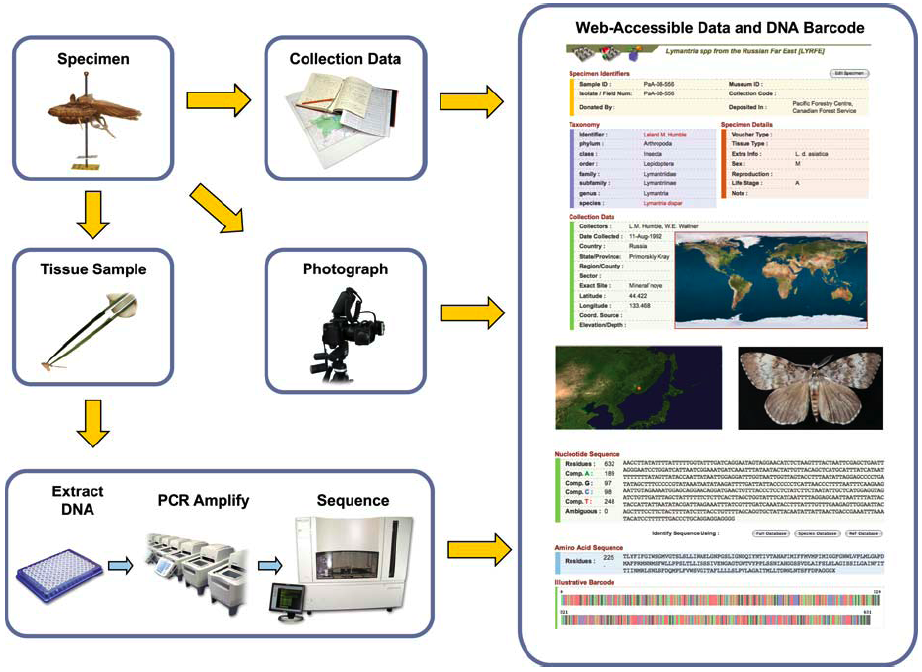
Abstract: To facilitate future assessments of diversity following disturbance events, we conducted a first level inventory of nocturnal Lepidoptera in Stanley Park, Vancouver, Canada. To aid the considerable task, we employed high-throughput DNA barcoding for the rough sorting of all material and for tentative species identifications, where possible. We report the preliminary species list of 190, the detection of four new exotic species (Argyresthia pruniella, Dichelia histrionana, Paraswammerdamia lutarea, and Prays fraxinella), and the potential discovery of two cryptic species. We describe the magnitude of assistance that barcoding presents for faunal inventories, from reducing specialist time to facilitating the detection of native and exotic species at low density.

leave a comment

A few photos from the Sechelt Inlet, BC…

August 16th, 2009 at 12:40 pm

Posted in Photos

leave a comment

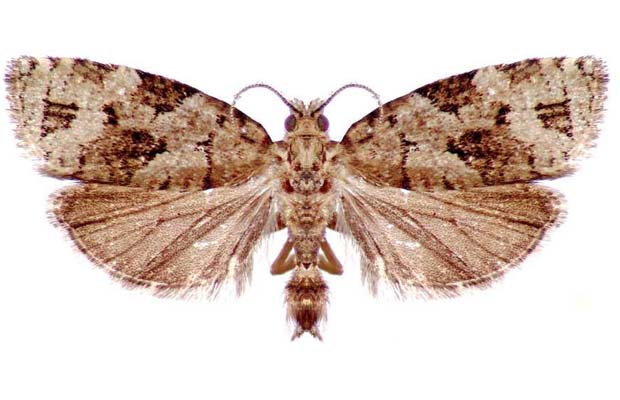
Delayed recognition of the European poplar shoot borer, Gypsonoma aceriana (Duponchel) (Lepidoptera: Tortricidae) in Canada. Journal of the Entomological Society of BC.

August 3rd, 2009 at 7:51 pm

Posted in Publications

Humble, L.M., deWaard, J.R., and Quinn, M. (2009). Delayed recognition of the European poplar shoot borer, Gypsonoma aceriana (Duponchel) (Lepidoptera: Tortricidae) in Canada. Journal of the Entomological Society of BC 106: 61-70 [abstract pdf] [full text pdf]

Abstract: The long-term presence of Gypsonoma aceriana (Duponchel) (Lepidoptera: Tortricidae: Olethreutinae), a European shoot-boring pest of poplars, was discovered in British Columbia during examination of cytochrome c oxidase I sequences of voucher specimens deposited in the Canadian Forest Service, Pacific Forestry Centre, arthropod reference collection.  Originally identified as a species of Epiblema, G. aceriana was first recovered in BC in 1980, almost 20 years before it was reported in Washington State.  DNA barcodes from both larval and adult collections are demonstrated to be conspecific with an adult collection from Great Britain.  Preliminary surveys of early and late instar larval feeding damage in southwestern British Columbia demonstrate that this shoot borer is established on southern Vancouver Island and throughout the lower mainland of the province.  The eastern-most collections made to date include locations near Yale in the Fraser Canyon, from the lower Coquihalla River watershed and from Hope.

leave a comment