You can find the powerpoint file of my ‘Museum Harvesting’ presentation here.

Poster posted here
My poster for the upcoming Barcode of Life conference in Adelaide can be downloaded here. It’s co-authored by Leland Humble at the PFC in Victoria, Canada. The abstract is the following:
BARCODE-FACILITATED INVENTORIES ELUCIDATE THE INFLUENCE OF A NATIVE PEST OUTBREAK ON THE MOTH DIVERSITY OF A PONDEROSA PINE FOREST SYSTEM
The recent outbreak of mountain pine beetle and related bark beetles (Dendroctonus spp.) in Western Canada is the most extensive and severe epidemic on record. The consequences of the death of most mature overstory pine trees have been well-studied for birds and other vertebrates intricately tied to the resource pulse, but very little has been done to determine what effect the severe change in habitat is having on comparatively neutral residents. To this end, we investigated the ecological consequences of the outbreak on resident biotic communities by measuring its effect on a species-rich component, the macro-moths (Lepidoptera). We employed DNA barcoding for rough sorting and species identification of nearly eleven thousand specimens to inventory eight ponderosa pine stands in British Columbia that differed widely in attack by Dendroctonus bark beetles. We determined that rarified species richness for the heavily impacted sites was significantly lower than that of the less impacted sites. Moreover, the linear regression analysis of site attributes and diversity estimates revealed that approximately 85% of the variance in species diversity is explained by ponderosa pine mortality. Macro-moths have a proven record as indicators of habitat integrity and their perceived depression in species richness may therefore be representative of the larger biotic system. The ecological consequences of increased pest outbreaks cannot be ignored when other natural and human-induced agents of disturbance are likewise increasing.

Keep the citations coming…
I was recently notified of this: our article ‘DNA barcodes for 1/1000 of the Animal Kingdom‘ is one of the top ten most cited Biology Letters articles for 2010. Here’s one good paper that cited it, a recent PLoS ONE paper by Axel Hausmann and colleagues.
One more PLoS ONE paper online
Another chapter from my thesis came out in PLoS ONE recently. It’s a brief study that compiles and assesses a nearly complete barcode library for the geometrids of BC (for a great overview of this family in BC, see p75 of Scudder and Cannings 2007). If you’re curious, the only species on our checklist that we didn’t successfully barcode was Hydrelia brunneifasciata (Packard)). Grab the open-access article here or from my ‘publications’ page, and the reference is as follows:
deWaard, J.R., Hebert, P.D.N., and Humble, L.M. (2011). A comprehensive DNA barcode library for the looper moths (Lepidoptera: Geometridae) of British Columbia, Canada. PLoS ONE 6: e18290.
Done, done and done
I successfully defended my dissertation on Dec 16, 2010 and have since submitted the revised thesis. Check out my exam presentation, programme, or the final thesis, should you be inclined. An even bigger milestone was reached more recently — Stephanie and I got married on Dec 29 in Oshawa! You can check out some pictures here.

PLoS ONE paper online
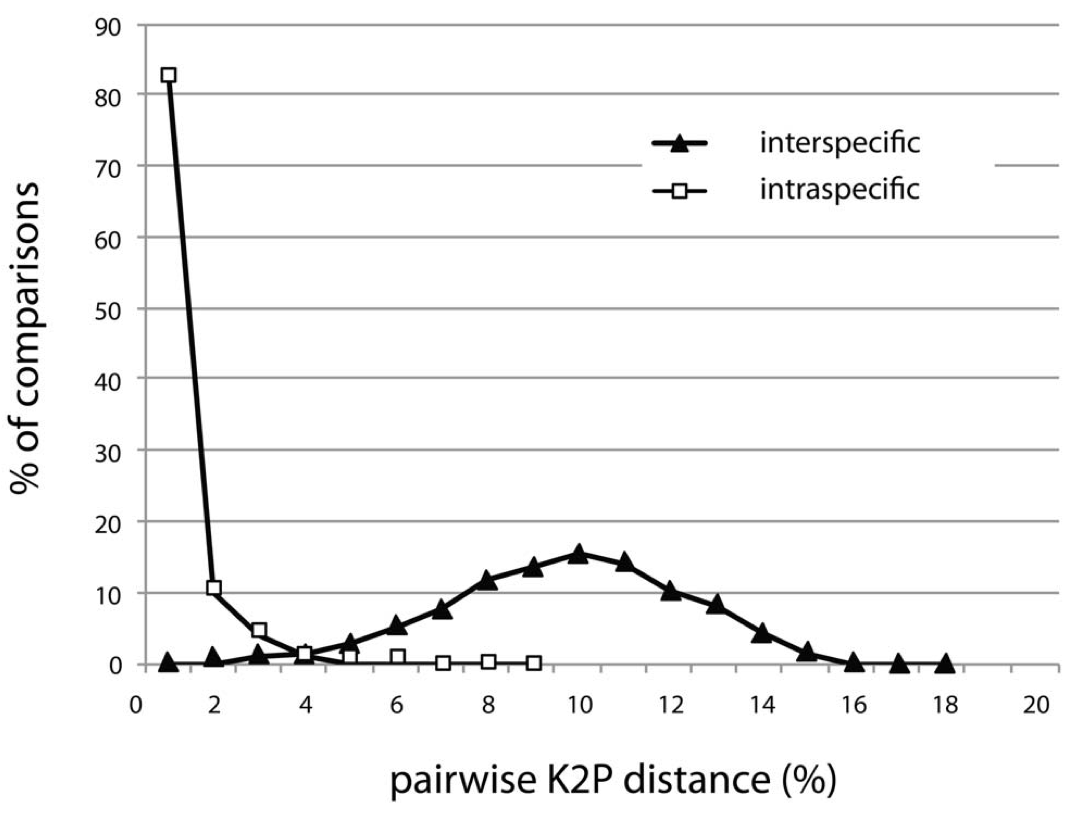
A paper that 10 colleagues and I wrote is now online at PLoS ONE. It develops and tests a partial global barcode library for surveillance of tussock moths of the genus Lymantria. You can find it here and the citation follows:
deWaard, J.R., Mitchell, A., Keena, M.A., Gopurenko, D., Boykin, L.M., Armstrong, K.F., Pogue, M.G., Lima, J., Floyd, R., Hanner, R.H. and Humble, L.M. 2010. Towards a global barcode library for Lymantria (Lepidoptera: Lymantriinae) tussock moths of biosecurity concern. PLoS ONE 5: e14280. doi:10.1371/journal.pone.0014280

Update: this is now part of a collection on the PLOS One site titled “Proceedings of the Third International Barcode of Life Conference, Mexico City“.
New article in press
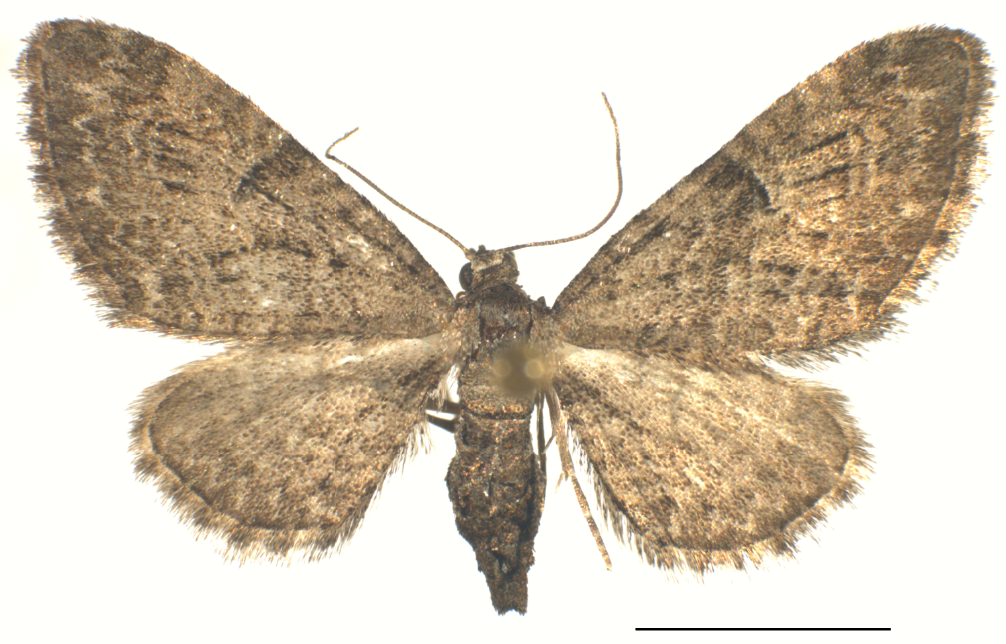
Our manuscript describing the detection of the juniper pug moth (Eupithecia pusillata) in North America has been accepted for publication in the Journal of the Entomological Society of British Columbia. The abstract is here and the citation is:
deWaard, J.R., Humble, L.M., and Schmidt, B.C.S. 2010. DNA barcoding identifies the first North American records of the Eurasian moth, Eupithecia pusillata (Lepidoptera: Geometridae). Journal of the Entomological Society of BC. In press.
Another milestone
Not long after the milestone of 1 million barcodes was reached in time for the official launch of the International Barcode of Life Project, our original barcoding paper has now reached 1000 citations according to ISI Web of Knowledge.

Stanley Park article highlighted in two goverment periodicals
Our article describing a preliminary inventory of native and exotic Lepidoptera in Vancouver’s Stanley Park (deWaard et al 2009) was discussed by two federal government periodicals. The first is following an interview I did with Monique Keiran of the Canadian Forest Service, Natural Resources Canada, and is found in ‘Information Forestry’, a periodical that covers research at the Pacific Forestry Centre [pdf, pp. 8-9].

The second is a Canadian Food Inspection Agency publication called ‘Science Scan’ that discusses research articles concerning animal and plant health, particularly those that pertain to emerging pests and pathogens [pdf, pp. 4-5].

Project blurbs in the NMNH’s ‘Bug Dispatch’
The Smithsonian/NMNH Department of Entomology puts out a short newsletter describing, among other things, the projects of visiting researchers. Stephanie Kirk and I are featured in the Winter 2010 edition detailing our September 2009 to January 2010 projects [pdf].